

In order to ensure that every voter can make their choice freely and securely on 3 October and that the public can have confidence in the conduct of the elections and the voting results, state institutions have been preparing purposefully and systematically for the 15th Saeima elections since January this year. Technical solutions have been prepared and tested, potential security risks have been identified and mitigated, response scenarios for various situations have been refined, and public information campaigns have been coordinated.
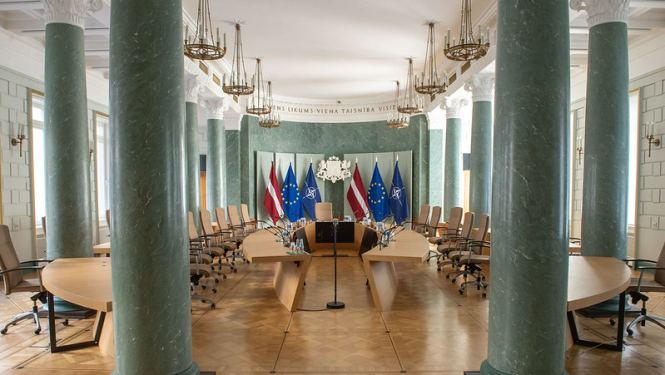
On Tuesday, 8 September, the Cabinet of Ministers heard an informative report on the work of the inter-institutional group, including the communication strategy for the integrity of the 15th Saeima elections. The report summarises the work carried out by the responsible authorities, their planned actions, the most significant risks and measures to mitigate them, while the strategy sets out common principles for informing the public.
Election security begins with preparation and extends through every stage of the process
To ensure that the electoral process is as secure as possible, the relevant authorities take steps well in advance. Well before the day of the elections, state institutions prepared both for the conduct of the elections and for potential attempts to undermine public confidence in the electoral process. The authorities paid particular attention to foreign influence and information manipulation, including AI-generated content and deepfakes, cyber-attacks and technical disruptions, illegal campaigning, covert funding and vote-buying, as well as physical threats and risks to public order.
The authorities are also preparing for various alerts and threats that may arise during the elections. The law provides for the possibility of extending polling station opening hours should voting have to be temporarily suspended due to an airborne threat, while the Central Election Commission (CEC) has developed clear response procedures for polling stations to ensure that decisions can be taken swiftly should such a situation arise.
Security – practical and verifiable solutions
In the 15th Saeima elections, ballot papers will not be scanned during the vote count; polling station staff will count the votes manually. Although manual vote counting may take longer in some cases, it also helps to alleviate concerns raised this spring, following the corruption scandal involving IT companies, about the potential impact of automated solutions on the election outcome. Accuracy and transparency are paramount in vote counting, which is why the process is strictly regulated by law to ensure that it is secure and traceable. Election results will be received gradually from polling stations, and every voter will be able to follow the results on the website of the Central Election Commission (CEC). The stability and security of the information technology systems used in the organisation of the elections will be monitored by a special operational team, which will immediately inform the relevant authorities of any risks identified.
IT systems are also being thoroughly tested ahead of the elections, including through the involvement of the relevant national security and cyber security authorities, as well as through independent audits. Particular attention is paid to the systems’ resilience to potential cyber threats, so that potential risks can be identified and mitigated at an early stage. The Electronic Online Voter Register (ETVR) will be used in the 15th Saeima elections. It enables electronic verification of voters’ eligibility to vote and facilitates accurate and secure voter registration. Since 2021, the ETVR has also enabled voters to cast their votes conveniently at any polling station of their choice. In preparation for the 15th Saeima elections, practical training on the use of election IT systems has also been provided to municipal election commissions and polling station commissions.
Consistent, timely and clear communication
The communication strategy for the integrity of the 15th Saeima elections, developed by the State Chancellery and its partners, sets out three main objectives: to strengthen public trust in the electoral process, to encourage participation, and to build resilience against attempts to undermine the integrity of the elections. The authorities will use coordinated messages, promptly clarify incidents and refute false information, as well as openly report on the conduct of the elections, casting votes for deposit before election day, the counting process and security checks. The authorities will also keep the media informed about preparations for the elections, the security measures in place and current trends in the information environment.
The State Chancellery, together with its partners, regularly monitors the information environment and analyses the experience of other countries. The Consumer Rights Protection Centre has identified the responsibilities of the relevant authorities and established rapid communication channels with the largest online platforms, including Meta, Google, X and TikTok.
The main official source of information on the electoral process, voting procedures and results is the website of the Central Election Commission. Meanwhile, the State Chancellery’s ‘Black on White’ project brings together information on electoral integrity, the risks of disinformation, manipulation techniques and the role of the relevant authorities.
Voters’ actions matter
According to the results of a sociological survey carried out by ‘TNS Latvia’ on behalf of the State Chancellery, in July this year 73.3% of Latvian citizens stated that they planned to take part in the Saeima elections – 4.4 percentage points more than in March. At the same time, 36.2% of Latvia’s residents are concerned about possible interference in the elections by Russia or another country hostile to Latvia. These figures show that, alongside the secure organisation of the elections, the public needs regular and transparent information about the state’s preparedness and actions.
We urge members of the public to check election-related information against official sources, to view emotional or sensational statements with a critical eye – particularly in the run-up to the election – and not to rush into sharing unverified content. Particular caution is required when encountering images, audio or video that appear realistic but have been artificially created. It is not the role of state institutions to influence people’s political choices – their role is to safeguard a fair process, equal opportunities and every voter’s right to vote freely.
We would also like to remind you that any Latvian citizen aged 16 or over may observe the conduct of the elections at polling stations, provided they register in advance in accordance with the procedure laid down by the Central Election Commission. This is an opportunity to see the electoral process first-hand, observe how voting and vote counting take place, and verify for themselves that the process is secure, transparent and conducted in accordance with established procedures.