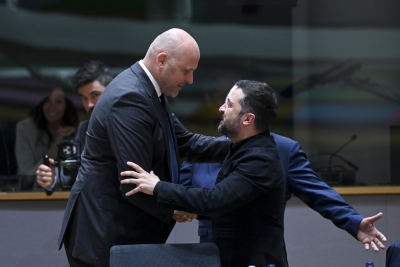
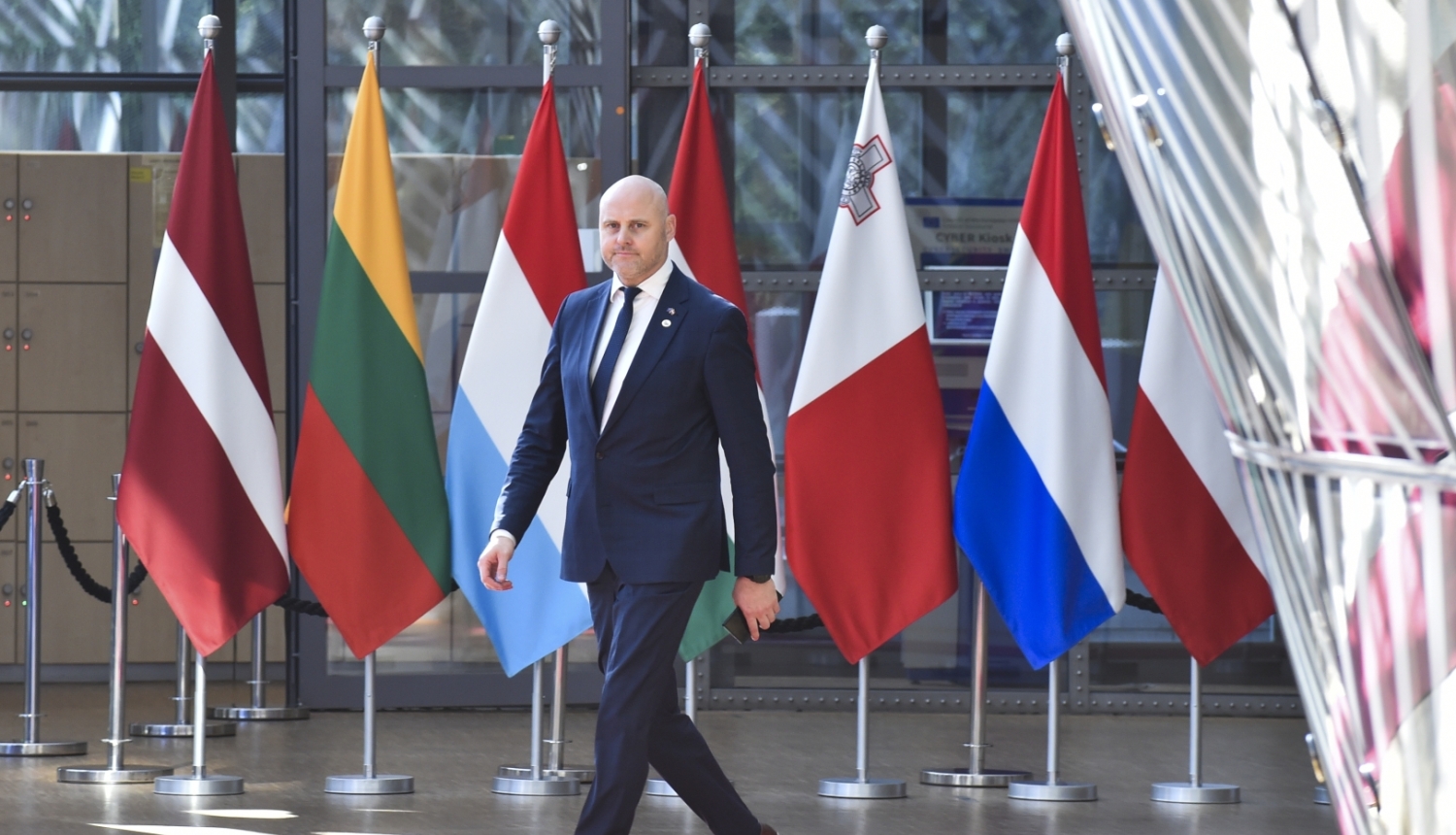
On 18–19 June, Prime Minister Andris Kulbergs attended the European Council meeting in Brussels (Belgium), representing Latvia’s national interests and emphasising the need to accelerate the implementation of European Union (EU) defence projects aimed at strengthening the Eastern Flank.
It is vital for Latvia that the EU-level defence projects (EDPCI) to strengthen the eastern border – Eastern Flank Watch and the Drone and Counter-drone Capabilities Project (DECODER) – be implemented as soon as possible. “Our country’s external border is also the European Union’s external border. Therefore, the defence capabilities of both Latvia and Europe as a whole must be strengthened. Latvia already allocates 5% of its GDP to defence, but European security is a shared responsibility, and all Member States should allocate a similar level of funding to defence,” emphasised Prime Minister Andris Kulbergs.
During a discussion with EU leaders, also attended by the President of Ukraine, Andris Kulbergs emphasised that long-term support for Ukraine remains a consistent priority for Latvia and that the EU must continue to provide all forms of support, including military assistance. Latvia’s position also includes strong support for strengthening the resilience of Ukraine’s economy and society and its national defence capabilities, including by increasing pressure on Russia, further isolating it internationally, including in sport and culture, and imposing economic restrictions.
Latvia also supports Ukraine’s integration into the European Union, calling for the launch of full-fledged accession negotiations and the opening of all clusters, starting with the ‘Fundamentals’ cluster.
Discussions at the European Council also covered the EU’s multiannual budget for 2028–2034 and the updated negotiating framework document (NegoBox)prepared by the Cypriot Presidency. Latvia’s main priority is a mechanism for strengthening the eastern border.
“Russia’s war in Ukraine has had a significant impact not only on the security situation in Europe, but also on national economies, the energy sector and the business environment. Our security begins with a strong and resilient economy. Special support instruments must be established for all countries along the eastern border that face security risks posed by an aggressor state and adversely affect investment attraction, tourism and the well-being of the population,” emphasised Andris Kulbergs.
The need to address inequalities in direct payments to Latvian farmers and to increase the level of these payments was also emphasised.
Discussions on the Middle East focused on the Iran–US peace talks, the situation in the Strait of Hormuz, Gaza, the West Bank and Lebanon. As regards global security challenges, Latvia emphasised that stability in the Middle East is an essential prerequisite for international security and that Iran must not be allowed to continue deliberately threatening civilians and civilian and industrial infrastructure or restricting international trade routes.
In view of the need to reduce the EU’s economic dependencies and address the growing trade deficit with China, discussions on strengthening the EU’s global competitiveness also continued at the European Council. Leaders also addressed internal aspects of the Single Market, as well as the impact of the crisis in the Persian Gulf region on energy prices and disruptions to supply chains for critical raw materials. Alongside the pursuit of the EU’s global competitiveness objectives, work must also continue on improving the Single Market and ensuring a level playing field both internally and globally.
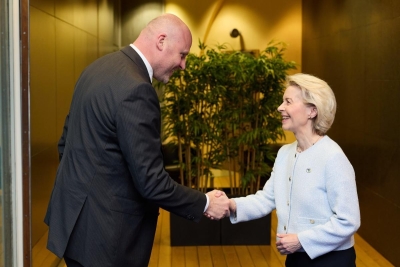
Ahead of the European Council meeting, the Prime Minister met in Brussels with the President of the European Council, António Costa, and the President of the European Commission, Ursula von der Leyen. During his meeting with President Costa, which focused on the European Council’s agenda, Andris Kulbergs emphasised Europe’s role in strengthening the security of Latvia’s and the EU’s entire eastern border. He also briefed President Costa on the situation in Latgale, where residents and businesses require state support. The Prime Minister’s discussion with the President of the European Commission also covered the strengthening of European security and defence, the EU budget and progress on the Rail Baltica project. Russia’s aggression against Ukraine was also discussed.
The Prime Minister also took part in the Friends of Cohesion meeting organised by Italy and Romania, where leaders from 15 countries discussed cohesion policy and compared their national positions ahead of negotiations on the multiannual budget. Meanwhile, a meeting of the NB6 countries (Latvia, Lithuania, Estonia, Sweden, Finland and Denmark) with the leaders of Ireland and Poland focused on regional security challenges, cooperation with Ukraine and a common approach to strengthening Europe’s eastern border.